Författare: admin

  • Vialumina is a part of CoMiMo

    Vialumina is a part of CoMiMo

    Vialumina is part of the micro-mobility project CoMiMo, a project funded by Drive Sweden to facilitate collaboration and address urban needs in home deliveries, micro-mobility, mobility hubs, as well as property and parking companies through digitalization, geofencing, and digital support for battery replacement in mopeds and electric scooters.

    Micro-mobility is experiencing exponential growth in cities within home food delivery, e-commerce deliveries, and Mobility as a Service (MaaS) with electric scooters Delivery companies like Foodora have rapidly established and expanded new services based on micro-mobility. This means significant potential for sustainable cities and transportation efficiency; however, there are substantial challenges.

    Project goals

    A verified system solution that eliminates the barriers that currently exist for connected, efficient, and safe micro-mobility

    Expected results

    A system solution is being developed where a unique multifunctional station serves as the cornerstone – the beacon – to address critical barriers related to user verification, proper parking, safety, and to eliminate time wastage, logistics, and battery management costs. The project’s demo will showcase solutions based on geofencing and connected vehicles, which collectively enable efficient, safe, and accessible micro-mobility.

    Vialumina’s role in the project

    Vialumina’s role in the project is to provide telematics technology.


    Period
    November 2022 – October 2024

    Funded by
    Drive Sweden

    Partners
    Lunds Universitet, CIKLO, Foodora, Vialumina, Nordstan, Högskolan Borås

    Vinnova Number
    2022-03074

    Contact
    Jonas Waidringer, Högskolan i Borås
    jonas.waidringer@hb.se

  • Elmia Lastbil: “How to get the most out of the battery capacity within your commercial fleet”

    Elmia Lastbil: “How to get the most out of the battery capacity within your commercial fleet”

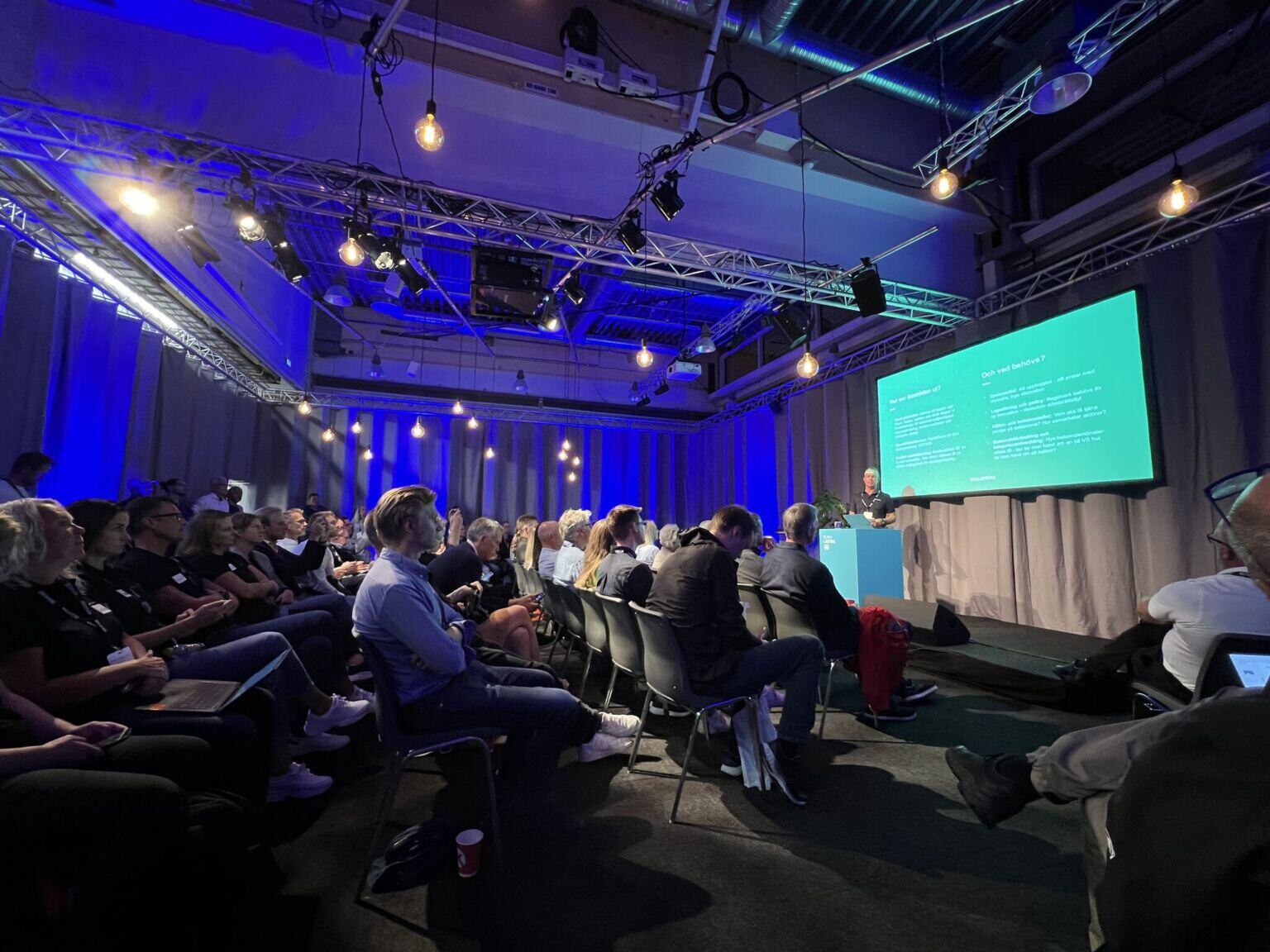
    During Elmia Lastbil Pontus Frohde, CEO at Vialumina, had the honor to present on stage on the topic of how to get the most out of the battery capacity within your commercial fleet. Did you miss out? No worries, here’s the main points from the session as a list.


    What’s the future for battery capacity in commercial vehicles?

    Increased efficiency: By connecting drivers, vehicles, chargers, and the power grid, we create the conditions for maximum utilization, resource optimization, reduced costs, and lower emissions.

    New revenue streams: Capitalize on your vehicle batteries, V2X/V2G.

    Positive societal contribution: Vehicle fleets will take on a new role in society – from being among the worst offenders to becoming a sustainable enabler for resource optimization.


    And what is needed to get there?

    System support: Everything connected – everything communicates with each other, no siloed systems.

    Legislation and policy: Regulations are needed for new innovation – as well as in terms of labor law.

    Business and payment models: Who will profit from the batteries? How will the stakeholders collaborate?

    Behavioral change and skill development: New behavioral patterns are necessary – how do you take care of a car versus how do you take care of a battery?

  • Tomas Wolf becomes Chairman of the Board at Vialumina

    Tomas Wolf becomes Chairman of the Board at Vialumina

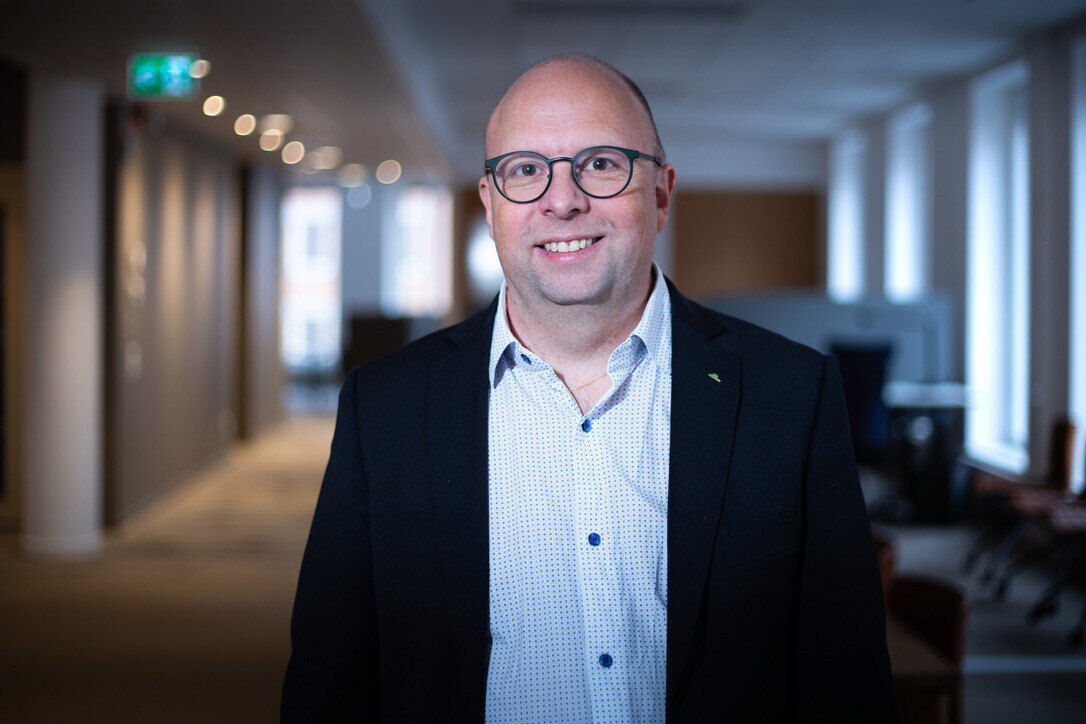
    Vialumina welcomes Tomas Wolf as the new chairman of the board and co-owner. Tomas brings over 35 years of experience in corporate management and international business development within software and electronics, as well as a solid background in investments in several successful startups. Among his experiences is the success story of Chargestorm, where Tomas served as chairman of the board alongside the founders until the company’s sale.

    “Tomas’s extensive background will be of great benefit to us,” says Pontus Frohde, CEO and co-founder of Vialumina. “As we now ramp up our ambition to digitize more vehicle fleets to accelerate decarbonization and reduce emissions, we need to ensure that we strengthen our team with the right individuals in the right positions. I am confident that we have found the right fit in Tomas.”

    “In this exciting phase of Vialumina’s expansion, I am delighted to have the trust to become the company’s first chairman of the board, and I am really looking forward to working alongside both the founders and their team”, says Tomas Wolf.

  • Vialumina, Mer, and Elis launches Flex Market Pilot to improve the future of fleet management

    Vialumina, Mer, and Elis launches Flex Market Pilot to improve the future of fleet management

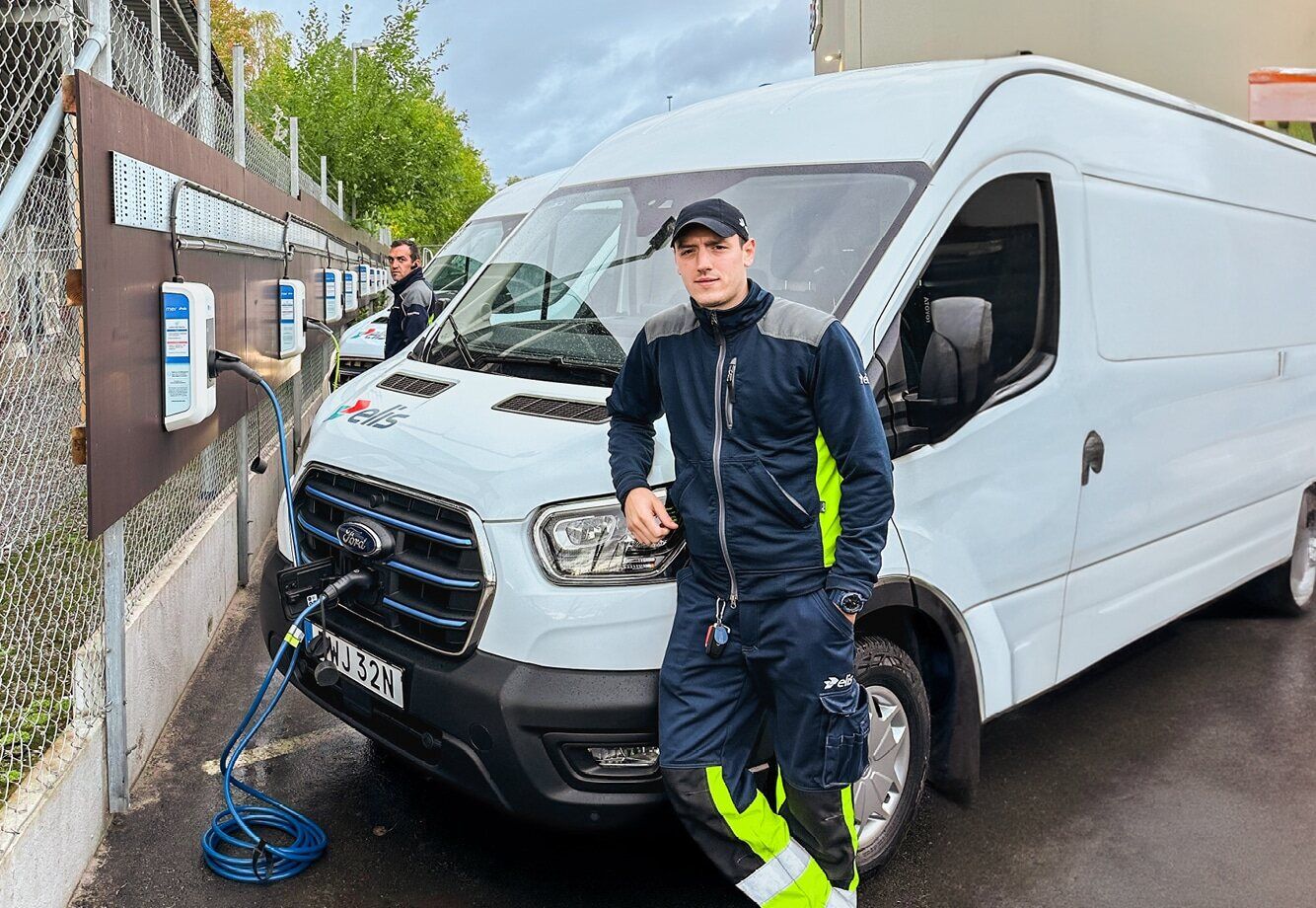
    Stockholm, Helsingborg, September 29th 2023 – Software-as-a-Service company Vialumina, charging operator Mer, and textile service company Elis have joined forces in a pilot project aimed at optimizing future energy usage. The purpose of the pilot is to test a technical solution that connects drivers, electric vehicles, and chargers to the flex market within the power grid, enabling more efficient and cost-optimized charging while also tapping into new revenue streams through vehicle battery integration – ultimately leading to sustainable vehicle fleets. The project will be conducted in a real-world environment at one of Elis’ facilities, with the goal of evaluating the technical solution in practice.

    “The need for resource capacity to support the Swedish power grid is significant, and electric vehicle fleets connected to the grid, known as Vehicle To Grid (V2G/V2X), will play a crucial role in the future. In essence, our solution allows companies to get paid for aligning their charging with the grid’s needs already today. Still, it is important to emphasize that these companies still need to operate their businesses, which means revenue linked to vehicle batteries must align with the terms of these companies,” says Pontus Frohde, CEO of Vialumina. “This requires connecting drivers, electric vehicles, chargers, and the power grid to the same system – and that’s what we are currently testing.”

    For charging operator Mer, the pilot represents an opportunity to assist customers in making informed decisions about investing in charging infrastructure on the journey towards electrified transportation.

    “At Mer, we want to help more companies with vehicle fleets transition to electric transportation in a straightforward manner. It’s important for stakeholders to come together to drive development and simplify the transition to fossil-free alternatives. Elis is a great example of a company with a clear ambition to pave the way for ‘electrified last-mile delivery’ in Sweden, using innovative technology,” says Johan Q Flodberg, Sr. Key Account Manager at Mer Sweden.

    The pilot project utilizes Elis as a case study. Elis is a global corporation with 54,000 employees in 29 countries. Their business model involves customers renting textiles instead of purchasing them, and Elis is responsible for collecting, laundering, repairing, and delivering textiles to various industries and sectors – an important work requiring daily transportation between different customers.

    “To address the challenges of power grid capacity, range, and payload on our distribution vehicles in the future, we all need to work together and find new, intelligent solutions – which is what we are doing here. Additionally, it will be a significant aid for Elis as we take the next steps in our electrification journey towards fossil-free transportation by 2030,” says Patrik Nyholm, Procurement Manager at Elis in Sweden.

    The pilot project between Vialumina, Mer, and Elis represents a significant advancement in electric mobility, charging optimization, and flexible energy management for vehicle fleets, with the hope of further developing the solution into a commercial offering in the near future.


    Contact

    Vialumina: Siri Melin, siri.melin@vialumina.se, +46 73 03 83 755

    Mer: Nina Petersson, nina.petersson@mer.eco, +46 70 00 33 920

    Elis: Linda Nilsson, +46 72 15 82 890

  • Vialumina welcomes Jakob Palmborg as the Vialumina tech team grows

    Vialumina welcomes Jakob Palmborg as the Vialumina tech team grows

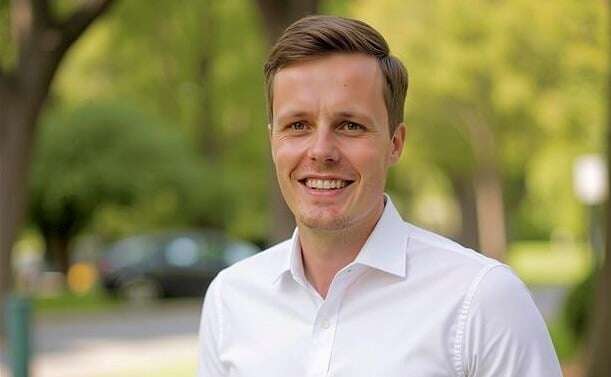
    As the Vialumina tech team grows, Vialumina is happy to announce the addition of Jakob Palmborg to Vialumina. Jakob Palmborg joins as a Developer on January 13th.

    ”We are very happy both to grow the tech team and the addition of Jakob to the team, he will bring valuable experiences to the team and serve as a key person for the development of our mobility management solutions”, says Patrik Lindergren, CTO at Vialumina.

  • Vialumina strengthens its sales team with Albin Ryd

    Vialumina strengthens its sales team with Albin Ryd

    We’re proud to welcome Albin Ryd as our new Sales Manager. Albin Ryd has extensive background within mobility and founded AutoCharge in 2016 – one of Sweden’s first charge point operators (CPOs) – which later merged with Opigo.

    ”I am excited to join Vialumina on the journey to build a mobility powerhouse for commercial fleets”, says Albin Ryd.

    ”Albin’s expertise and entrepreneurial spirit make him a great addition to our team. We’re looking forward to seeing him drive our sales efforts to new heights”, says Pontus Frohde.

  • Patrik Lindergren joins Vialumina as CTO

    Patrik Lindergren joins Vialumina as CTO

    We are pleased to announce that the EV Charging veteran, founder and former CEO of Chargestorm, Patrik Lindergren is joining Vialumina AB as Co-Founder and CTO.

    Patrik Lindergren founded Chargestorm in 2009 and served as the CEO until 2018 when his company was acquired by the leading battery charging company CTEK where he served as the CTO for CTEK until June 2021.

    Prior to Chargestorm and CTEK Patrik spent many years working as a Senior System Architect and Software Developer focused mainly on embedded systems and IoT.

    Vialumina AB was founded in December 2020 by the former CEO of Charge Amps, Pontus Frohde with the mission to fast forward the transition to electrified fleets providing smart, optimized, connected and shared services starting off with the transport sector.

    “I am thrilled to dive into the world of connected vehicles helping fleet owners to go electric and optimize operations in a way that will save both money, the environment and transform the transport sector” says Patrik Lindergren.

    “Patrik and I were main competitors in the EV-Charging business and I am both excited and honoured to now have Patrik on board Vialumina and finally work together. His vast and deep technical experience in both electric vehicles, EV-Charging and IoT will be a game changer for us and I could not have wished for a better partner”, says Pontus Frohde, CEO of Vialumina AB.

    Patrik Lindergren will officially start his new position as of September 21, 2021.

    For any further information please contact:

    Pontus Frohde, pontus.frohde@vialumina.se or mobile +46 70 959 36 51

    Patrik Lindergren, patrik.lindergren@vialumina.se or mobile +46 73 543 33 61

  • Siri Melin joins Vialumina as CXO

    Siri Melin joins Vialumina as CXO

    Siri Melin joins Vialumina as its first CXO and will be responsible for brand, design, marketing and communications in order to strengthen Vialumina’s position in the mobility management market.

    “We are at an exciting point where our positioning efforts are more important than ever, hence the prioritization of this role as one of the first additions to the Vialumina management team”, says Pontus Frohde, CEO at Vialumina. “Siri Melin has an exciting background within B2B technology marketing, innovation management and navigating complexity which we are certain will be of great benefit to our journey ahead”.

    “Honk if you’re ready”, Siri Melin comments, in regards to her new role.

  • The Future of Fleet and Mobility Management: 2024 Trends

    The Future of Fleet and Mobility Management: 2024 Trends

    The landscape of fleet management is undergoing a transformative shift. For fleet managers, staying abreast of these changes is not just beneficial—it’s imperative. This article is intended to serve as a guiding light to some the key signals poised to redefine fleet- and mobility management trends in 2024 – and beyond.

    Radicalized decarbonization

    COP28 left us with the continued insight that decarbonization is a must – and it needs to be radical. Statistics tells that between 1/4 and 1/3 of all GHG emissions in Europe stems from ground transportation – hence the importance to decarbonize commercial fleets.

    As part of the global push towards decarbonization, policies and regulations are increasingly shaping fleet management strategies. In Europe, the European Union’s Green Deal, CSRD, the EU Green Taxonomy and similar initiatives worldwide are setting ambitious targets for reducing greenhouse gas emissions from transportation. In 2024, these policy directives are guiding fleet managers towards more sustainable practices, emphasizing sustainability as a core aspect of mobility management, instead of looking at mobility as just a practice of operational efficiency.

    Increased commercial EV adoption

    Given the demands on sustainable practices more and more businesses and public organizations will turn to electrification of their fleets – regardless of the development among private vehicle buyers.

    Fact is, it has never been easier to decarbonize a fleet and it has never been easier to run an electric one. With recent major advancements in infrastructure in general, like development of public charging networks and lowered costs of installing own chargers to get, many companies are integrating electric and hybrid vehicles into their operations.

    Conversation shift: HOW rather than the WHAT or the WHY

    Yet, there is still more to do in order to help companies and organizations with the practical aspects of decarbonizing their fleets, but in 2024 we’ll see a major shift in the conversation switching from the WHAT and the WHY, rather diving in to details on the HOW. At this point, the very few fleet owners still reluctant to electrification will find themselves forgotten as the rest of the industry leaves them behind in order to change the dialogue to become slightly more action oriented.

    Fleet operators want to know HOW to get going with their electrification journeys and they are tired of generic messaging about that ‘it is time to decarbonize’. Their main concern is how to make electrification a business case and they need help with the actual data and the calculations – the fact based estimates on how to approach their electrification journeys, at what pace and to what cost – without compromizing their businesses or exceeding their budgets.

    V2G/V2X Technology

    V2G/V2X will be a game-changer for mobility management and fleet managers – even though we’re not quite there yet. This technology enables seamless interaction between electric vehicles (EVs), the power grid, and their environment, offering unparalleled operational efficiency – and possibly also the possibility to capitalize on commercial fleets as batteries and energy storage. There is still a long way to go, especially within policy making, for V2X and V2G to be available at scale – but the efforts to explore the field will continue in 2024.

    More reading: In 2023 Vialumina, Mer and Elis shipped a pilot to explore technology for V2G development.

    The future of fossil fuel

    While we’re still supporting electrification and decarbonization of commercial fleets, it is not unthinkable that there will be shift in the dialogue about the actual use of fossil fuel too. Gasp! What did we write? Well, let us explain.

    Geopolitical matters and perspectives shared from an increasingly instabile world will call for sane, action oriented discussions on the actual use of fossil fuels from the perspective of when the excuse of use exceed the damage done from emissions. Read: There will be situations where it will be completely fine and even encouraged to run vehicles on fossil fuels e.g. in crisis situations – but these parameters needs to be defined further.


    Conclusion:

    As we navigate the complex terrain of modern fleet and mobility management, these signals stand out as beacons illuminating the path forward and shaping the trends of tomorrow.

    Fleet- and mobility managers who embrace these signals early on will be able to position themselves to not only overcome current challenges but also to excel in a future where adaptability and technological integration are keys to success.